Stroke Physiotherapy at Home: What Patients and Caregivers Should Know
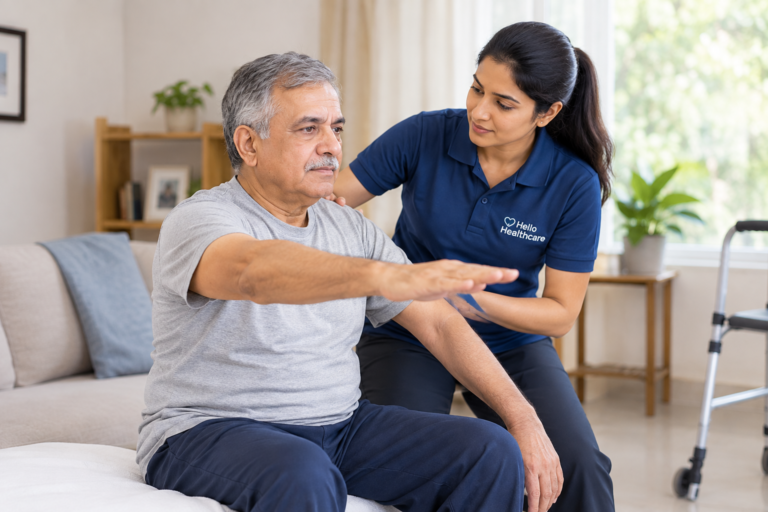
A stroke can affect movement, balance, strength and independence in everyday activities. For patients who have difficulty travelling to a clinic, physiotherapy at home can provide rehabilitation in a familiar environment.
But what actually happens during home physiotherapy after a stroke? What can a physiotherapist work on, and how can family members support the process?
How can a stroke affect movement?
The effects of a stroke vary from person to person. Some people may experience weakness on one side of the body, while others may have difficulty with balance, coordination, walking or everyday movements.
Common physical challenges can include:
- Difficulty walking
- Weakness in an arm or leg
- Poor balance
- Difficulty standing from a chair
- Difficulty getting in and out of bed
- Reduced coordination
- Reduced confidence with movement
- Dependence on family members for mobility
The rehabilitation programme should therefore be based on the individual’s actual abilities rather than a standard set of exercises.
What happens during stroke physiotherapy at home?
A home physiotherapy session usually begins with an assessment.
The physiotherapist may look at:
- Current mobility
- Strength and movement
- Balance
- Walking ability
- Transfers
- Functional activities
- Use of walking aids
- The patient’s home environment
- Assistance available from caregivers
The findings help the physiotherapist develop an appropriate rehabilitation plan.
What exercises or activities may be included?
Depending on the patient’s condition, physiotherapy may include:
1. Bed mobility
Patients may practise movements such as turning, repositioning and moving between lying and sitting.
2. Sitting and standing
Repeated, appropriately supervised practice can help patients work on functional movements such as standing from a chair.
3. Balance training
Balance exercises can be adapted to the patient’s current level and progressed gradually.
4. Walking and gait training
For patients who are able to walk, rehabilitation may include supervised walking practice and training with an appropriate mobility aid.
5. Strength and movement exercises
The physiotherapist may prescribe exercises designed around the patient’s specific movement limitations and goals.
6. Functional activities
The focus may be on movements that matter in everyday life rather than exercises performed in isolation.
Why can home physiotherapy be useful after a stroke?
One advantage of rehabilitation at home is that the physiotherapist can see the environment in which the patient actually lives.
This may help identify practical challenges involving:
- Stairs
- Bed height
- Chairs
- Bathroom access
- Walking space
- Mobility aids
- Transfers
It can also make it easier for caregivers to understand how to assist safely.
What role does the caregiver play?
Family members often become an important part of stroke rehabilitation.
However, helping a patient does not necessarily mean doing every movement for them.
Depending on the patient’s needs, a physiotherapist may teach caregivers how to:
- Assist with transfers
- Support prescribed exercises
- Encourage appropriate independence
- Reduce avoidable fall hazards
- Use mobility aids safely
- Follow positioning recommendations
The level of assistance should be appropriate to the patient’s abilities and safety needs.
How often does a stroke patient need physiotherapy?
There is no single schedule that applies to every stroke patient.
The appropriate frequency depends on factors such as the patient’s condition, mobility, medical stability, rehabilitation goals, tolerance and ability to participate.
A physiotherapist can recommend a suitable programme after assessing the patient.
Can physiotherapy guarantee recovery after stroke?
No.
Stroke recovery is different for every individual and can depend on many factors.
Physiotherapy provides structured rehabilitation and opportunities to practise movement and functional activities, but no responsible clinician can guarantee a particular recovery timeline or outcome.
The focus should be on realistic goals and measurable progress.
When should a stroke patient seek urgent medical attention?
Physiotherapy is not a substitute for emergency medical care.
If someone develops sudden new symptoms such as facial weakness, weakness or numbness in an arm or leg, difficulty speaking, confusion, vision problems, a severe sudden headache or other symptoms suggestive of a new stroke, seek emergency medical attention immediately.
Do not wait for a physiotherapy appointment.
Stroke physiotherapy at home in Delhi NCR
Hello Healthcare Physiotherapy provides home physiotherapy services across Delhi NCR, including Delhi, Gurugram, Noida, Greater Noida, Ghaziabad and Faridabad, subject to therapist availability.
If a family member is recovering from a stroke and travelling to a clinic is difficult, a home assessment can help determine the patient’s current rehabilitation needs.
Before booking, keep these details ready:
- Patient’s locality
- Approximate time since the stroke
- Current walking ability
- Whether assistance is required for transfers
- Main rehabilitation concern
Frequently Asked Questions
Can stroke patients receive physiotherapy at home?
Yes. Home physiotherapy can be appropriate for patients who need rehabilitation but have difficulty travelling to a clinic. Suitability depends on the individual’s medical and functional condition.
Can physiotherapy help with walking after a stroke?
Physiotherapy can work on balance, strength, transfers and walking practice when appropriate. However, improvement varies between individuals and cannot be guaranteed.
Can a bedridden stroke patient receive physiotherapy?
Patients with very limited mobility may still require rehabilitation, but the programme needs to be adapted to their condition. An assessment is important before beginning exercises.
Should family members participate in physiotherapy?
A caregiver can be an important part of rehabilitation, particularly when the patient needs help with mobility or transfers. The physiotherapist can explain how much assistance is appropriate.
How long does stroke rehabilitation take?
There is no fixed recovery period. Progress varies according to the individual’s condition, rehabilitation needs and other factors.
Need stroke physiotherapy at home?
If travelling to a clinic is difficult for a stroke patient, home physiotherapy may be an option.
Hello Healthcare Physiotherapy provides home physiotherapy across Delhi NCR.
You can enquire about a home assessment and share the patient’s locality and current mobility level so the appropriate service can be discussed.