
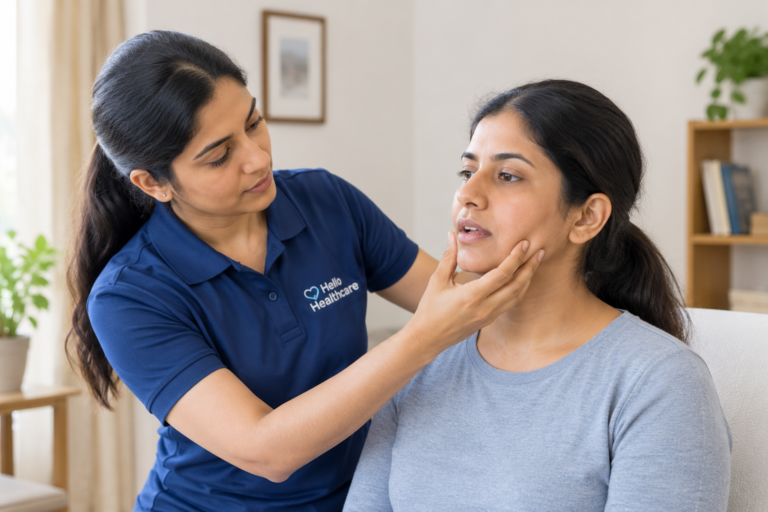
Physiotherapy for Jaw Pain: Can It Help TMJ Problems?
Jaw pain can make surprisingly simple activities uncomfortable. Eating, talking, yawning or opening your mouth may become difficult, and some people also experience clicking, headaches, ear discomfort or stiffness around the jaw.
One possible cause is a temporomandibular disorder (TMD), which affects the jaw joint and the muscles involved in jaw movement. TMD can have different causes and symptoms, and not every case requires physiotherapy.
For some people, however, physiotherapy can be part of a conservative treatment approach.
What is TMJ or TMD?
The temporomandibular joints (TMJs) are the joints that connect the lower jaw to the skull. They allow the jaw to open, close and move from side to side.
The term temporomandibular disorder (TMD) describes problems affecting the jaw joint, surrounding muscles or related structures.
Symptoms can include:
- Pain around the jaw
- Pain around the ear or temple
- Difficulty opening the mouth fully
- Jaw stiffness
- Clicking or popping during jaw movement
- Jaw locking
- Headaches around the temples
- Facial or jaw muscle tenderness
Not everyone with jaw clicking has a serious joint problem, and symptoms can vary considerably between people.
What can cause jaw pain?
Jaw pain can have several possible causes.
These may include:
- Jaw joint or muscle problems
- Previous injury
- Teeth grinding or jaw clenching
- Changes in jaw function
- Stress-related muscle tension
- Problems involving the neck or surrounding muscles
- Other dental or medical conditions
Because jaw pain has different possible causes, it is important not to assume that every case is a TMJ problem.
A dentist or doctor may be appropriate when dental, joint or other medical causes need to be investigated.
Can physiotherapy help jaw pain?
For some people with TMD, physiotherapy can help manage pain, stiffness and movement problems.
Physiotherapy may involve an assessment of:
- Jaw movement
- Pain and tenderness
- Mouth opening
- Jaw movement pattern
- Muscles around the jaw
- Neck movement
- Posture and related physical factors
Treatment is then selected according to the individual’s symptoms rather than using the same exercises for everyone.
Physiotherapy guidance for TMJ problems can include exercises, massage, advice about movement and strategies for managing symptoms.
What might physiotherapy treatment involve?
Jaw movement exercises
A physiotherapist may teach controlled jaw movements designed to improve movement and coordination.
The exercise needs to match the person’s specific presentation. Some jaw exercises are appropriate only for particular diagnoses, so repeatedly performing exercises found online without an assessment is not always advisable.
Relaxation and muscle management
Some people develop increased tension or clenching around the jaw. Learning to keep the jaw relaxed when it is not being used for eating or speaking may be helpful.
Stress can also increase pain for some people with TMD, although stress is not necessarily the underlying cause of the disorder.
Massage
Depending on the presentation, gentle treatment of muscles around the jaw may be included.
A physiotherapist can demonstrate appropriate techniques rather than having the patient apply excessive pressure to a painful area.
Neck and posture assessment
Jaw symptoms can occur alongside neck problems.
A physiotherapist may therefore assess the neck and upper-body movement as part of a broader physical assessment.
What can you do when your jaw is painful?
If your jaw is irritated, temporarily reducing activities that aggravate it may help.
General self-management advice can include:
- Avoid chewing gum
- Avoid repeatedly clenching your teeth
- Avoid very hard or chewy foods during a painful flare
- Avoid opening the mouth excessively wide
- Try softer foods temporarily if chewing is painful
- Use a warm or cold pack if it feels helpful
- Keep the jaw relaxed when you are not eating or speaking
These measures are not a substitute for assessment when symptoms are persistent, severe or unusual.
Should you see a dentist or a physiotherapist for jaw pain?
Sometimes the answer is both.
A dentist may be appropriate when there are concerns involving teeth, dental health or grinding.
A doctor or other medical professional may be needed when symptoms suggest a condition outside a straightforward musculoskeletal jaw problem.
A physiotherapist can be useful when the presentation involves jaw movement, muscular pain, stiffness or related physical problems that are appropriate for physiotherapy management.
The right starting point depends on the symptoms.
When should jaw pain be checked urgently?
Jaw pain should not automatically be treated as a physiotherapy problem.
Seek prompt medical or dental assessment if you have significant difficulty eating or drinking, your jaw becomes locked, you cannot open your mouth normally, symptoms are severe or worsening, or you have other concerning symptoms.
Jaw pain accompanied by symptoms such as sudden neurological changes, significant facial swelling, breathing difficulty or other emergency symptoms requires urgent medical attention rather than waiting for physiotherapy.
Can physiotherapy be done at home for jaw pain?
Some physiotherapy assessment and education can potentially be provided at home, depending on the patient’s circumstances and the physiotherapist’s scope of practice.
However, jaw problems can require dental or medical assessment, and not every jaw condition is appropriate for home physiotherapy.
For this reason, the first step should be determining what is causing the symptoms and whether physiotherapy is suitable.
Jaw pain and physiotherapy in Delhi NRC
If you are experiencing jaw pain along with movement or muscular problems, a physiotherapy assessment may help determine whether rehabilitation is appropriate.
Hello Healthcare Physiotherapy provides physiotherapy services across Delhi NRC, including Delhi, Gurugram, Noida, Greater Noida, Ghaziabad and Faridabad, subject to therapist and service availability.
If you contact us, it is useful to mention:
- Where the pain is located
- How long you have had it
- Whether the jaw clicks or locks
- Whether opening your mouth is difficult
- Whether chewing makes it worse
- Whether you have already seen a dentist or doctor
This information can help determine the appropriate next step.
Frequently Asked Questions
Can physiotherapy help TMJ pain?
It can help some people with TMD, particularly when symptoms involve jaw movement, muscle pain or stiffness. Treatment should be based on an individual assessment.
What physiotherapy is used for jaw pain?
Depending on the condition, physiotherapy may include jaw movement exercises, muscle management, massage, education and assessment of related neck or movement problems.
Is jaw clicking always a problem?
No. Clicking or popping can occur without significant pain or functional problems. However, clicking accompanied by pain, locking or restricted movement should be assessed.
Should I do TMJ exercises from YouTube?
It is better not to assume that an exercise designed for one type of TMD is appropriate for another. Some exercises are intended only for specific presentations, so assessment can help determine what is suitable.
Can stress make jaw pain worse?
Stress can contribute to increased muscle tension and may increase pain in some people with TMD. It does not necessarily mean that stress is the original cause of the problem.
Can a physiotherapist treat jaw pain without a dentist?
Sometimes physiotherapy can be part of management, but dental or medical assessment may also be appropriate depending on the symptoms and suspected cause.
The important point
Jaw pain is not always simply a problem with the jaw joint.
The muscles, jaw movement, neck and everyday habits can all be relevant, while dental and other medical causes may also need consideration.
A proper assessment is therefore more useful than simply choosing a set of jaw exercises from the internet.